Perusing the latest news on government policy decisions gave me a clear understanding of public reactions to most government policies. Here's a hint, they're generally negative. If an industry likes a policy they seem to remain silent, potentially to not highlight their lobbying efforts. If they disagree, they tend to be vocal about how a new policy will crush their industry. Maybe the government wanted to crush the industry or maybe it was acceptable collateral damage for a greater social benefit. It's easy to get wrapped up in the specific complaints and surface arguments, but it's more important to analyze the tradeoffs that led to the decision.
As an example, Germany modified their pharmaceutical payment plan to reduce the cost of consumer drugs. Eli Lilly CEO, John Lechleiter, spoke on the issue, stating that the change will ruin Germany's traditional leadership role in pharmaceutical innovation.
 |
| Eli Lilly CEO, John Lechleiter |
Since the relationship between the price of drugs and the incentive to create new ones is well known, Germany must not have made that decision without understanding his point. The decision must have been made understanding that the societal benefit of more access to drugs would outweigh loss in the domestic pharmaceutical sector. The implication is that the German government must not believe that they are a leader in the sector globally, because their reduced contribution to the number of drugs is smaller than their citizens' benefit from increased in access to drugs. If the same policy was implemented globally (or in the US), Mr. Lechleiter's comments would be more accurate. This is also why a similar policy never gains traction in the US.
A common argument against these types of government interference, is that a market solution, such as cap-and-trade, is a much more effective way to meet a societal goal without dictating the specific solution. The Australian Carbon Tax is such and example. The government press release highlights the tax's benefits of innovation and alternate energy sector growth.
Understandably, the coal mining companies were vocally opposed to the idea. They had some clever cartoons to illustrate their point.
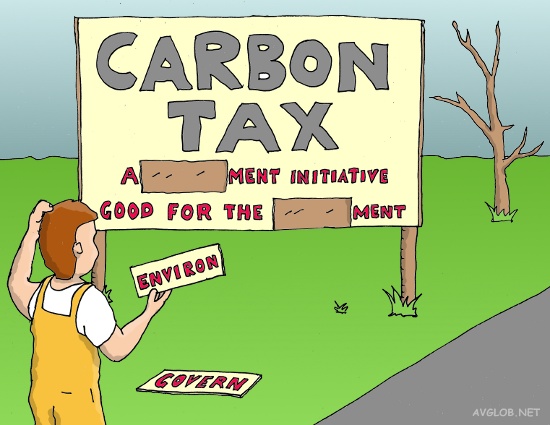
This case may seem different, but it is really the same as the drug issue. The Australian government has determined that the benefit of moving off of a carbon economy is more important than maintaining their coal industry. In fact, it is pretty obvious that the government is intentionally ridding itself of the industry and must feel that the benefit of the growth in other sectors and the environmental benefit will outweigh their decision to move away from the coal industry.
A government policy to help one aspect of society will almost always be at the expense of another part of the economy. The people that will lose will complain. Rather than focus on the complaint, the decision must be well founded and the benefit must outweigh the cost to the penalized part of society. There is not a policy decision that can be made without assessing the secondary effect since the tentacles of government extend so deeply into all aspects of society. I just hope that our leaders are thinking of that while they play brinksmanship with the debt ceiling.

No comments:
Post a Comment